Reverse Logistics
Return shipping and labels
Choose a return route, prepare accurate labels and follow parcel handover while accounting for Australian return-cost responsibilities.
Identify the item, why it is coming back and whether it can travel as an ordinary parcel, then choose the return route. Tell the customer who arranges transport, who pays, how to identify the return and what happens after handover. A label is a transport instruction, not approval of a refund.
Decide the transport route
For a change-of-mind return, follow the shipping terms the store offered. For a reported product problem, identify the issue and check the applicable consumer-guarantee guidance before confirming next steps.
Check packed dimensions and weight before proposing ordinary postage. Australia Post’s Parcel Post range covers sending over 5 kg up to 22 kg using your own packaging. Fitting within a carrier’s limits does not establish that this customer can reasonably return the product that way. An installed appliance needs a different transport decision from a boxed item that can readily be carried to a Post Office.
| Route | Consider it when | Decide before giving instructions |
|---|---|---|
| Retailer-provided label | The item suits the selected parcel service and the store will arrange postage | Label format, destination, parcel details and lodgement method |
| Customer-arranged postage | The item is readily postable and the applicable terms permit the route | Address, return reference, tracking and how reasonable costs will be reviewed if a problem is confirmed |
| Arranged collection | Posting is unsuitable or collection is required | Carrier suitability, access, packing, pickup contact and handover evidence |
Australia Post’s domestic Parcel Post generally takes 2–6 business days and includes up to $100 compensation for loss or damage, plus tracking with three options. Postage using your own packaging is based on weight or cubic weight, whichever is greater. Some exempt dangerous goods can be sent when they meet the conditions and are correctly packaged and labelled. Exempt items need no Dangerous Goods declaration.
Australia Post Parcel Post Service Details
- Delivery Time2–6 business days
- Compensation for Loss/Damage$100
- Tracking Options3 available
- Weight LimitUp to 22 kg
Make the label match the parcel
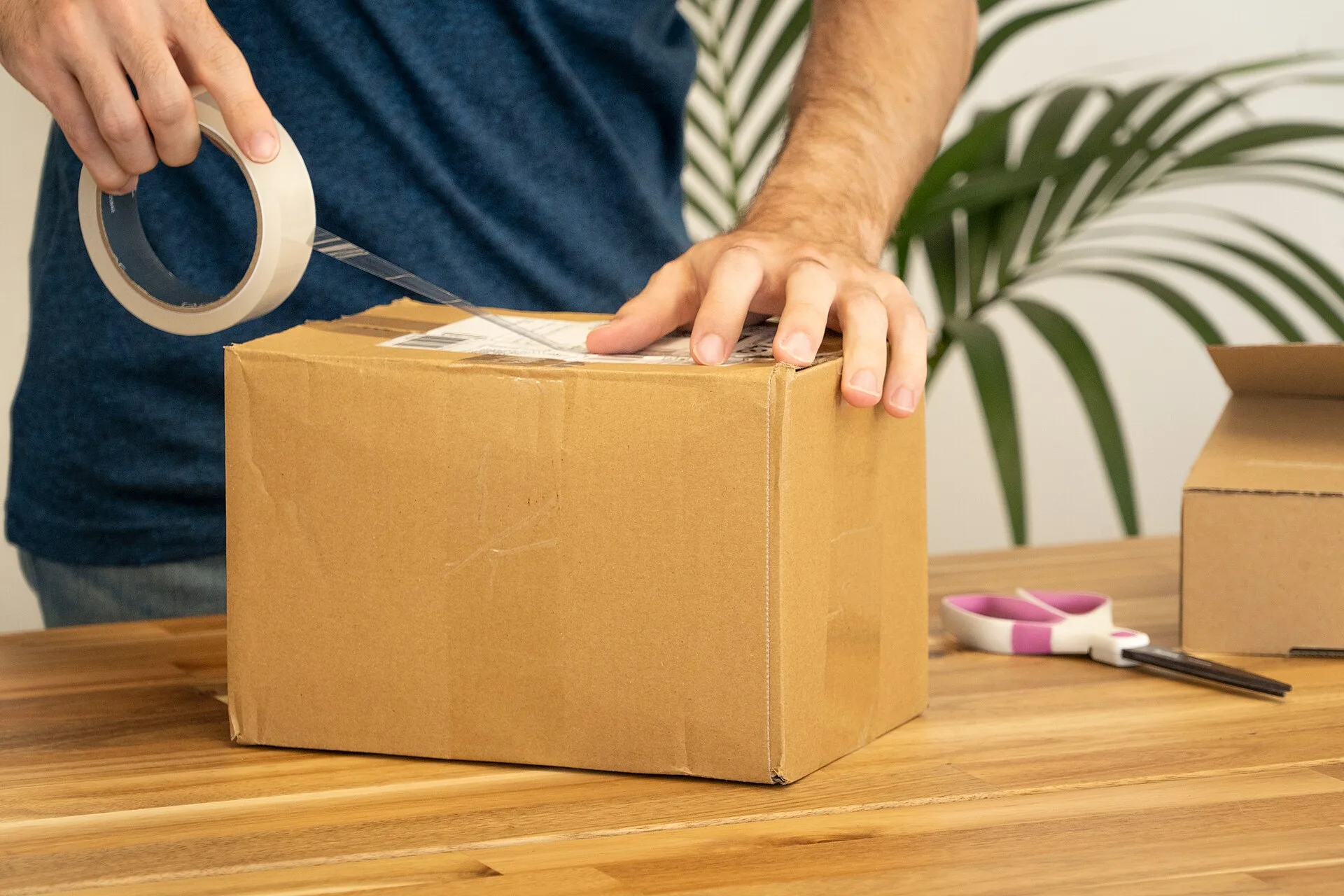
Check the return address, sender details, case reference, parcel count and packed size. Tell the customer to cover old shipping labels and identify each parcel. For a partial-order return, do not assume the parcel matches the original outbound package.
Australia Post’s Parcel Send matching return label uses the same dimensions, weight and shipping method as the outbound parcel. Its documented Australia Post flow excludes international and multi-parcel shipments and dangerous goods.
A matching return label is created with the outbound shipment, so the customer does not need you to create a separate return label and send it to them. An eligible Parcel Send user can instead create a separate return with sender references and email its label to the sender. Confirm the retailer’s account and service options before promising either method.
Explain how the customer will obtain and use the label, including what to do if they cannot print it. Offer a printing, lodgement or pickup option only when the selected service supports it.
Express Post is not available for returns, so a shipment carrying a matching return label cannot use it, and transit cover applies only to the outgoing shipment. The account is charged for the return only when the return label is used.
To create a matching return label, start a new shipment as normal and tick “Create a matching return label for this parcel” at the bottom of the Parcel details section. The matching return label prints with the shipment label.
The separate Create a return function is only for Parcel Send users with Australia Post and StarTrack accounts. Choose + New then Return. Confirm the Return details address the parcel ships to. Enter the sender’s details and any sender references that print on the label. Then choose the shipping and label printing method. Email label to sender needs a correct address because failed delivery is not notified.
Parcel Post prepaid satchels for 5 kg or under are priced by size, not weight: extra small 280 × 215 mm $10.55, small 355 × 225 mm $12.05, medium 390 × 270 mm $16.40, large 405 × 315 mm $20.70 and extra large 510 × 440 mm $24.95.
MyPost Business customers can create a return in the platform by searching for the original transaction and creating a return label to share.
Connect transport to the return case
Record the return reference and tracking number against the affected order lines. Keep label issue, carrier handover, carrier delivery and identification of the contents as separate events. Creating a label does not show that the customer posted the item; a delivery scan does not show what was inside.
If a parcel cannot be matched to a case or the handover needs correcting, use the support route available for the actual account and service. Tell the customer the next confirmed action.
Keep the remedy decision separate
Transport status alone does not decide a remedy. The business may assess a reported product problem, and the outcome depends on the facts and the applicable consumer-guarantee guidance.
Assign an owner when collection fails, a parcel cannot be matched or an item arrives damaged. Record any postage reimbursement decision separately from the product remedy. Tell the customer the next confirmed action.
The ACCC educates consumers about their rights under the consumer guarantees and accepts reports, but it does not resolve individual disputes or give legal advice. It can investigate businesses that mislead consumers about their rights.
In this guide
- Comparing prepaid labels with customer-arranged shippingCompare prepaid return labels with customer-arranged postage by payment, case matching, evidence and Australian return-cost responsibilities.
- Tracking a return parcel before issuing a resolutionInterpret return tracking events, investigate gaps and use parcel evidence appropriately when deciding the next step in a return case.