Reverse Logistics
Part of Reverse logistics and warehouse handling
Separating saleable returns from damaged stock
How to hold returned items, make a unit-level saleability decision and prevent damaged stock entering the pick area.
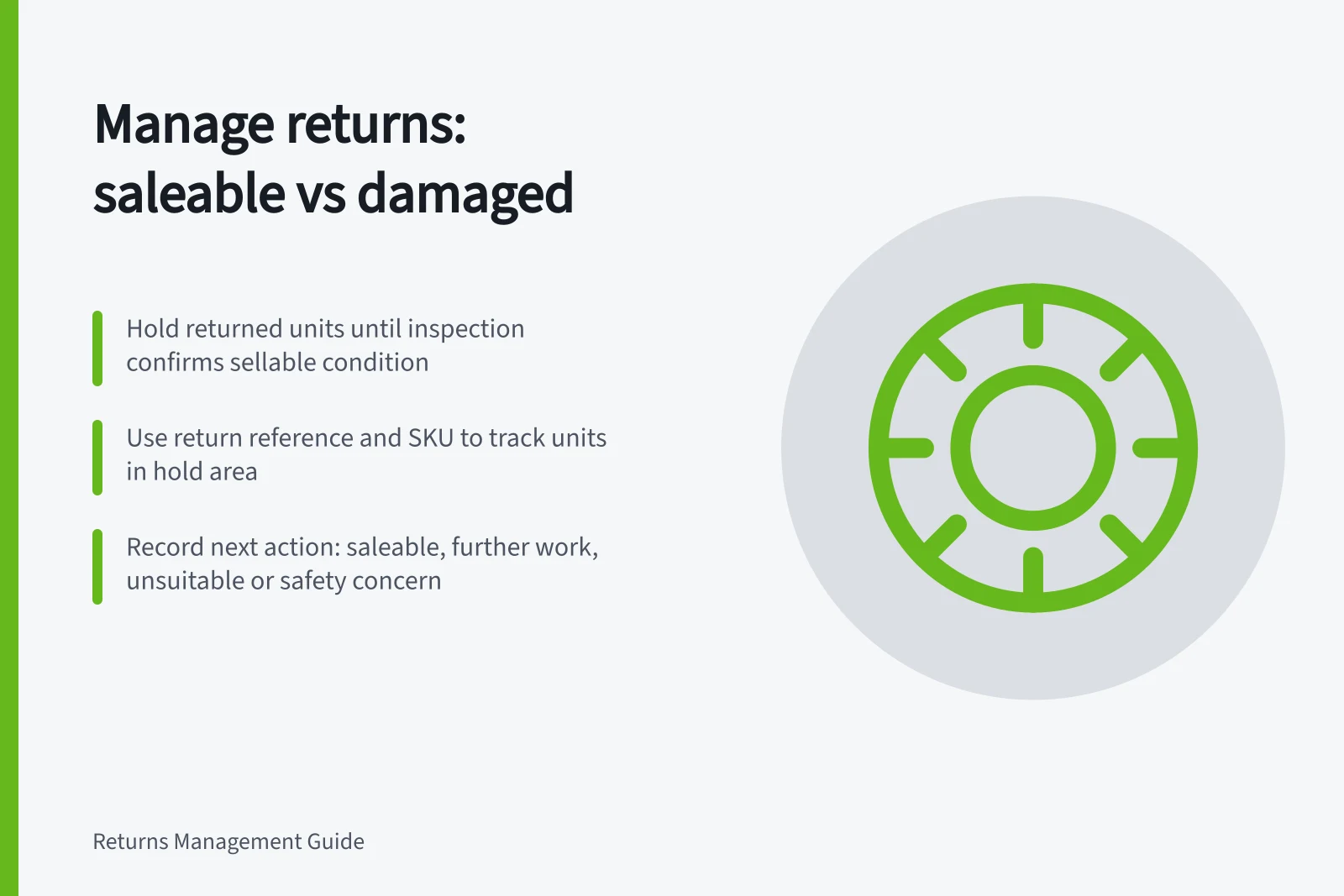
Hold each returned unit outside saleable stock until someone decides whether it can be offered in the condition promised to the next buyer. A clean carton is not enough to release an uninspected item.
Australian Consumer Rights for Faulty Products
- Refund, Repair or Replacement
- Consumer has right under Australian Consumer Law (ACL)
- Timeframe for Action
- Must be resolved within a reasonable time after purchase
- Product Recall Authority
- Product Safety Australia oversees recalls for unsafe products
Control the physical item and the available quantity
Use a receiving or inspection area from which staff cannot pick orders. Label the unit with its return reference and, where relevant, its SKU or serial number.
Record the quantity received against the case. When that quantity is added to inventory, keep it unavailable to sell until inspection is complete. Confirm that the system controlling orders reflects the hold; a shelf label alone will not stop an order.
In Shopify, the return process lets staff choose whether to restock an item and at which location. Its inventory states distinguish Available quantities that can be sold from Unavailable quantities set aside, for example, for damage or quality control.
On hand includes Available, Committed and Unavailable quantities. These are quantities by variant and location, not an inspection record for an individual unit. Keep the return reference and condition decision in a record that can identify the unit.
Inventory States in Shopify
- Available
- Can be sold; ready for order fulfilment
- Committed
- Reserved for an active order but not yet shipped
- Unavailable
- Held for damage, quality control, or returns inspection
Decide at unit level
Use the check appropriate to the product. Record observed condition, missing components, packaging condition and any reason the unit cannot meet the advertised condition. Damage to a shipping carton is different from damage to the product. If the result is uncertain, leave the unit on hold for another decision.
Record one next action:
- Saleable:approve the unit for the condition in which it will be offered, move it to an approved pick location and update available quantity once.
- Further work:keep it unavailable while cleaning, repair assessment or verification is pending.
- Unsuitable for sale:keep it out of the pick pool and record who will decide its destination.
- Potential safety concern:prevent sale and escalate through the product safety process.
For refund-entitlement decisions, see the related article.
Check the boundary
Compare units in the hold area with unavailable quantities and unit records. Investigate adjustments that made a return available without approval, and check the pick area for held or unexpected returned items. When physical and system records disagree, trace the particular unit and adjustment before correcting the count.