Returns Policy
Reducing avoidable returns
Choose a supported product, information or packing change to prevent recurring returns, then review later complaints without restricting customer remedies.
Reduce avoidable returns by changing something the retailer controls before the next order: the product, its description, the choice presented to buyers or the way it is packed.
Start with a recurring customer problem and check the item supplied. A return count alone cannot identify the cause.
Choose the action the evidence supports
Review complaints for one product or stable variant. Keep the customer’s account, the order record and any inspection finding separate. Ask what could reasonably have changed before those purchases.
| Repeated account | Check before choosing a fix | Possible action |
|---|---|---|
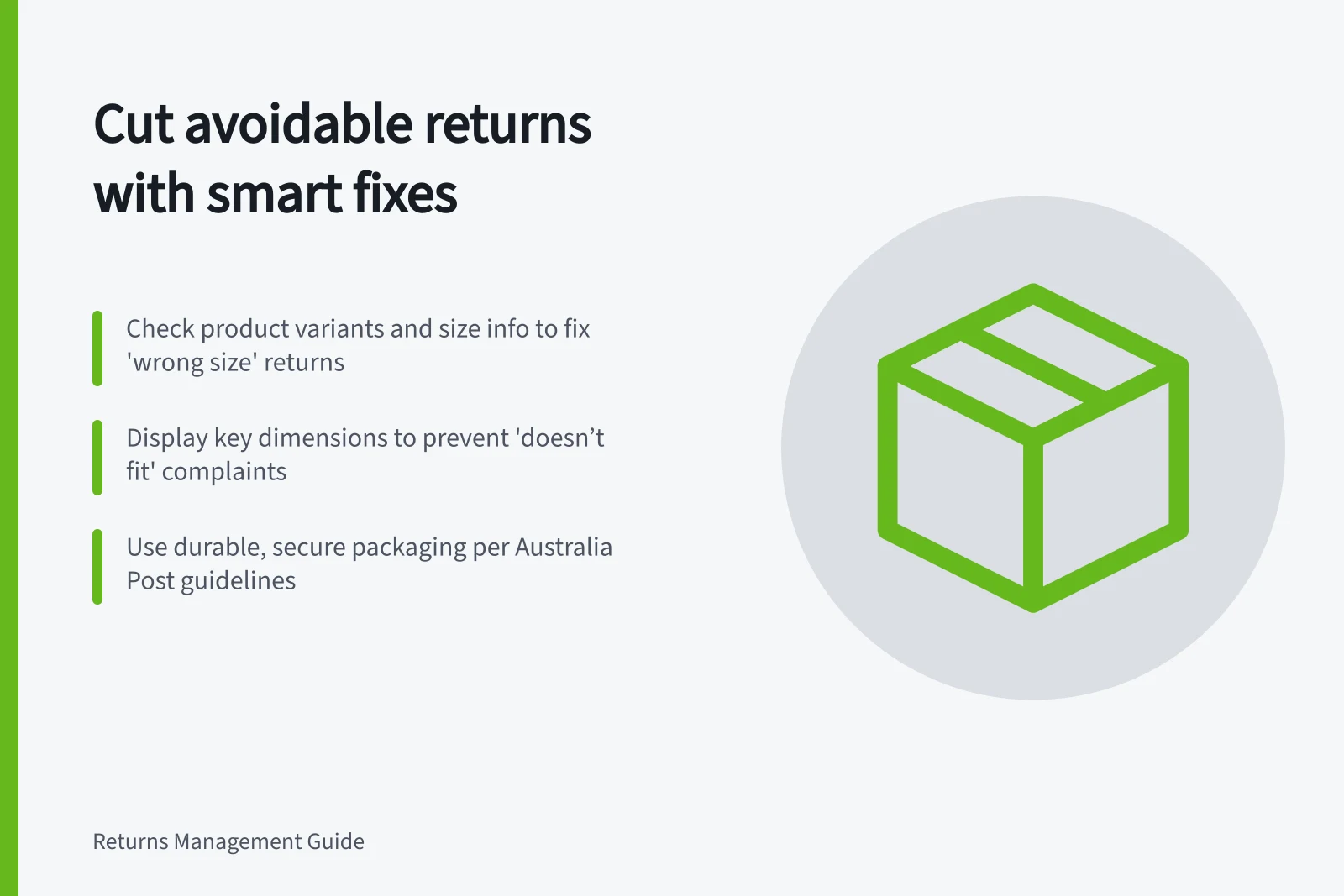
| “The size was wrong” | Ordered and supplied variants; size information; actual item measurements | Correct the supply error or clarify the specific size choice |
| “It does not fit the space” | Which dimension mattered; listing version; supplied item | Define and display that dimension |
| “It arrived broken” | Product, inner protection and outer pack; packing method used | Correct a supported packing weakness |
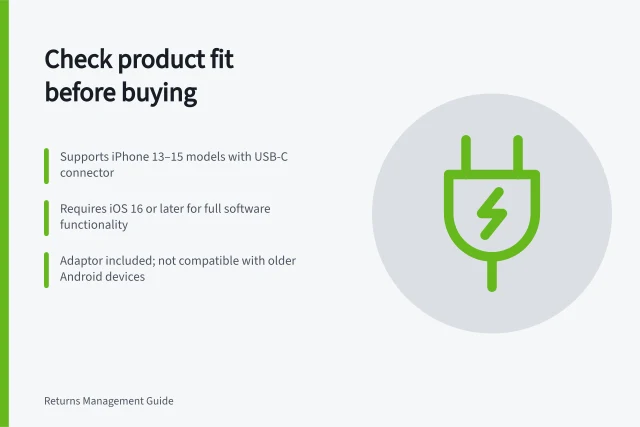
| “It will not work with my device” | Exact models, connection and claim available at purchase | Narrow or correct the compatibility claim |
These are possible routes, not cause labels. A wrong size may have been picked in the warehouse; a damaged product may already have had a fault before dispatch. If the evidence cannot distinguish the explanations, record that uncertainty and make the next check specific.
Make one targeted change
Correct the information for the variant sold. The ACCC can require businesses to back up claims they make about their products or services, and it can investigate misleading or false claims. A relevant limitation belongs near the claim it qualifies.
For example, an assembled dimension should not be confused with carton size, and a supported device range should not be implied to cover every similar model.
Where damage on arrival points to packing, record that as a possible cause and use the dedicated packaging guidance for the detail; do not treat a written packing instruction as proof that the packed item was protected.
Record the affected variants, the page or pack version, and the first orders that could receive the change. Account for older stock or packaging still in use. Treat a proposed check or transport trial as unperformed until its result is recorded.
Keep product claims supportable
Keep the material that supports each relevant claim with the product and listing version it applies to. When an intervention changes a claim, check that the supporting material still relates to the item and wording buyers see.
If the basis does not support the claim, revise or remove it rather than relying on a return-rate improvement as evidence that it is accurate.
Check the finished parcel
Check that the item fits securely in the packaging, and that the packaging is durable and secured, following Australia Post’s packaging guidance.
Key Compliance and Packaging Guidelines
- ACCC Consumer Guarantees
- Businesses must provide products that meet consumer rights under Australian law
- Australia Post Packaging Guide
- Use durable, secure packaging that protects items during transit
- Misleading Claims Risk
- ACCC can investigate false or misleading advertising claims
- Refund Rights
- Customers may request repair, replacement, refund or cancellation under ACCC rules
Decide whether to keep the change
Read later complaints about the problem the change was meant to address. Show the number of units supplied and the relevant complaints or physically returned units for orders with a comparable opportunity to be delivered and returned. Keep requests and refunds without a physical return separate.
Promotions, batches and buyer mix can change at the same time, so a difference is not proof that one edit caused it.
Also check unresolved product problems and whether customers can still report them. A lower return count is useful only alongside evidence that buyers receive an accurately described, suitable product and legitimate claims are handled correctly.
Use regulatory information carefully
The ACCC educates businesses and consumers about consumer guarantee rights and obligations, and accepts reports about possible problems. It uses reports to inform its education, compliance and enforcement work; it may investigate if a business misleads consumers about their consumer guarantee rights.
An ACCC report is not a decision on an individual customer’s entitlement or remedy. The ACCC does not resolve individual disputes or provide legal advice about what a business needs to do in a particular situation.
In this guide
- Improving sizing information from actual return feedbackTurn specific sizing complaints into checked garment measurements and clearer size choices, then review later feedback without overstating the result.
- Showing product dimensions customers often misunderstandDefine the endpoints, product state, unit and variant behind a misunderstood dimension so buyers can judge physical fit before ordering.
- Fixing packaging problems behind transit damageInvestigate arrival damage, specify a product-level packing change and review later deliveries while handling customer remedies separately.
- Clarifying product compatibility before purchaseWrite checked model, connection and version limits so buyers can judge compatibility before ordering and retailers can assess reported mismatches.