Returns Data
Part of Reducing avoidable returns
Improving sizing information from actual return feedback
Turn specific sizing complaints into checked garment measurements and clearer size choices, then review later feedback without overstating the result.
Use sizing complaints to pinpoint the choice a buyer could not make confidently. Check the actual garment or shoe before changing its guide. “Too small” alone does not establish whether the buyer chose an unsuitable size, the item differed from its stated measurements, or the wrong variant was supplied.
Find the specific fit question
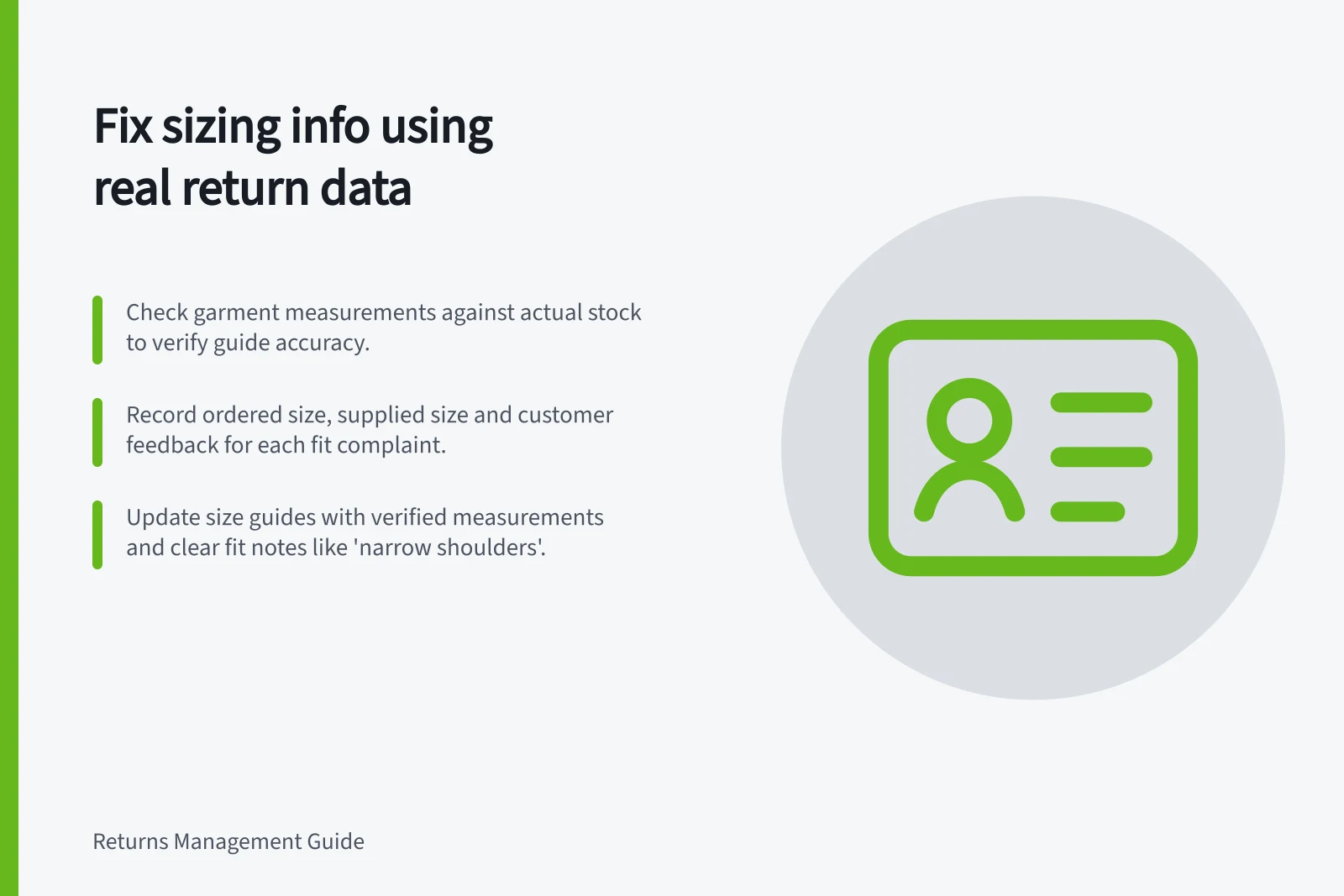
For the affected style and variant, record the ordered size, supplied size, purchase date, customer’s words and any inspection finding. If more detail would help, ask which part felt tight or which measurement the buyer used. A customer does not need to measure themselves to report a product problem.
Separate a delivery error from a guide problem. If the customer ordered medium and received small, check fulfilment. If the ordered size arrived but its sleeve differs from the published measurement, check the item and description.
A preference for a looser fit may call for clearer fit guidance. More than one issue can appear in one case.
Read comments by style and variant. Several unrelated products sharing a “too small” reason code do not justify a single site-wide warning.
Verify what the guide describes
Check an item from the stock version involved against the retailer’s specification and the measurements on the page. Record the batch or version checked if production may differ. An average across styles cannot establish the dimensions of a particular item sold.
Define how each measurement is taken. A shirt’s chest figure might mean a flat measurement across the front or its circumference. A body measurement and a garment measurement are different too. Label each one, use centimetres and state an approximation only where the actual specification supports it.
For shoes, specify whether a figure is foot length or insole length. Check the insole measurement on a stock item against the published figure. Do not invent a tolerance to explain complaints.
If the supplied item differs from the page, correct the information and review the customer’s case separately. The ACCC notes that it does not resolve individual disputes or give legal advice about remedies.
Change the choice presented to buyers
Show the checked measurements for the selected variant near the size choice. Explain how to compare a garment measurement with a similar item the buyer owns. If a repeated complaint concerns a narrow shoulder or short sleeve, name that checked feature instead of saying only “runs small”. State differences between colours, batches or styles only when verified for the options being sold.
Keep the earlier page version and the date of the change where available. This helps establish what information was available for earlier orders, though it does not prove which details an individual buyer read.
After the edit, read new complaints about the same body area or measurement. Compare orders that could have seen the revision with earlier orders after a similar delivery and return window, showing units supplied alongside complaints and physical returns. A lower count alone may reflect fewer sales or a different product mix. If the same issue persists, check the product and wording again.
Process to Improve Sizing Guidance Using Return Feedback
- Identify recurring sizing complaints by style and variant
- Verify actual measurements of the affected stock item
- Update product page with verified measurements and clear fit notes
- Monitor new return feedback for the same body area or measurement
- Compare pre- and post-update return rates and customer feedback