Returns Data
Part of Returns data and root-cause analysis
Tracking changes after a product issue is fixed
Assess a product fix using affected orders, comparable return periods and the complaint the change was meant to address.
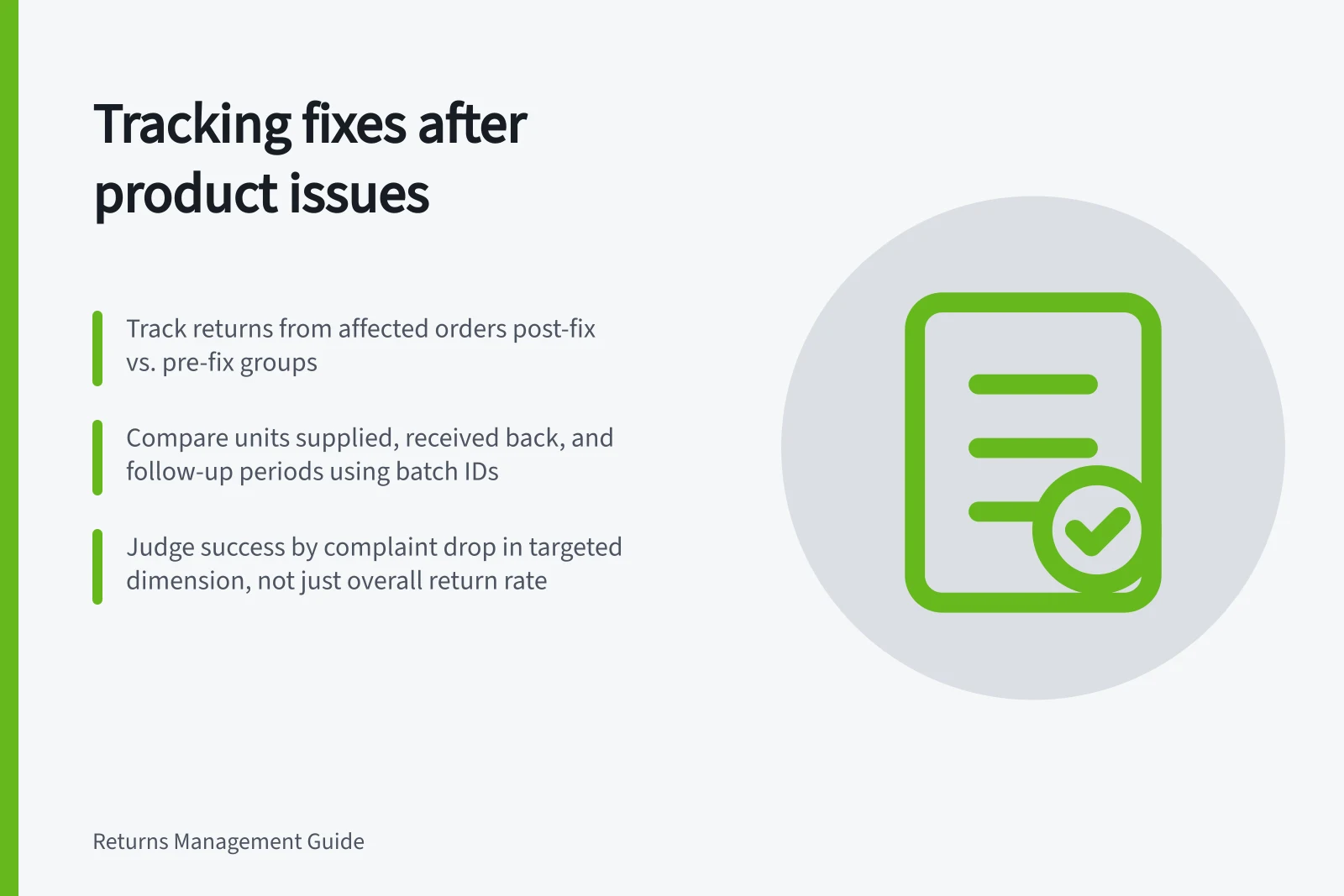
Track the fix from the first orders it could affect, then compare them with a suitable earlier group. Report the targeted complaint, units supplied, units physically received back and the follow-up period. A lower return count after a change means little if sales also fell, or if newer orders have not had time to come back.
Record what changed
Note the issue, the affected product and variants, the change made, its owner and when it took effect. Separate a product alteration from a listing edit, a packaging change or a warehouse instruction. Where old and new stock overlap, use a batch or other identifier; order date alone may not show which version a buyer received.
Set the expected outcome before reviewing the numbers. Judge a corrected dimension against complaints about that dimension, and a changed component against reports of that failure. Watch the overall return rate as well, in case a different problem emerges.
Follow the affected orders
A return received after the fix may relate to a purchase made before it. Group sales by the product or information version that could have affected the buyer. Count units supplied and units later received back under the same rules for both groups. Give newer orders a similar opportunity to generate returns, and show pending requests separately.
Read case descriptions and inspection findings, not just reason totals. A falling reason count can reflect a changed reason menu or different staff coding. Report counts, rates, dates and the follow-up period together, not a percentage alone.
Check other explanations
Consider changes in price, promotions, customer mix, stock source, season, fulfilment and returns handling. If several changed together, the observed difference cannot confidently be assigned to one fix. An unaffected variant or product over the same periods may reveal a wider shift, though it may differ from the affected item in other ways.
When sales are few, individual cases may be more useful than a percentage. Handle a serious reported fault promptly on its own facts; do not wait for a completed comparison.
Decide what the evidence permits
Close the improvement task once the change is in place, affected older stock or information is accounted for, and the follow-up evidence is sufficient for the decision. If the targeted complaint persists, investigate the new cases. If the comparison is inconclusive, record that result and continue monitoring.