Returns Policy
Part of Writing a clear store returns process
Explaining return steps in plain language
Turn store return instructions into clear customer actions, with plain wording for product problems and change-of-mind requests.
Write each return step as a customer action, then what the store will do next. Use familiar words, order the actions and explain any branch that changes the next step. A customer should be able to tell what information they need, where to send it and what response to expect.
Name the action and who owns it
“Submit an RMA” makes a customer decode an internal process. “Tell us what went wrong and give us details that help us find your purchase” gives them an action. If a photograph or serial number helps, explain why you ask for it and whether the customer can start without it.
Use you for the customer’s action and we for the store’s. “We’ll review the issue you describe and tell you the next step” is clearer than “Eligibility will be assessed”. It also names who will respond.
A step can follow this pattern:
- Do this:the customer’s immediate action.
- Include this:the information needed at that point.
- Expect this:the store’s next response, with a timeframe only if the store can meet it.
Put an exception beside the step it changes. If an item is too large or heavy for ordinary posting instructions, say so before telling the customer to send it.
Your Return Journey in Simple Steps
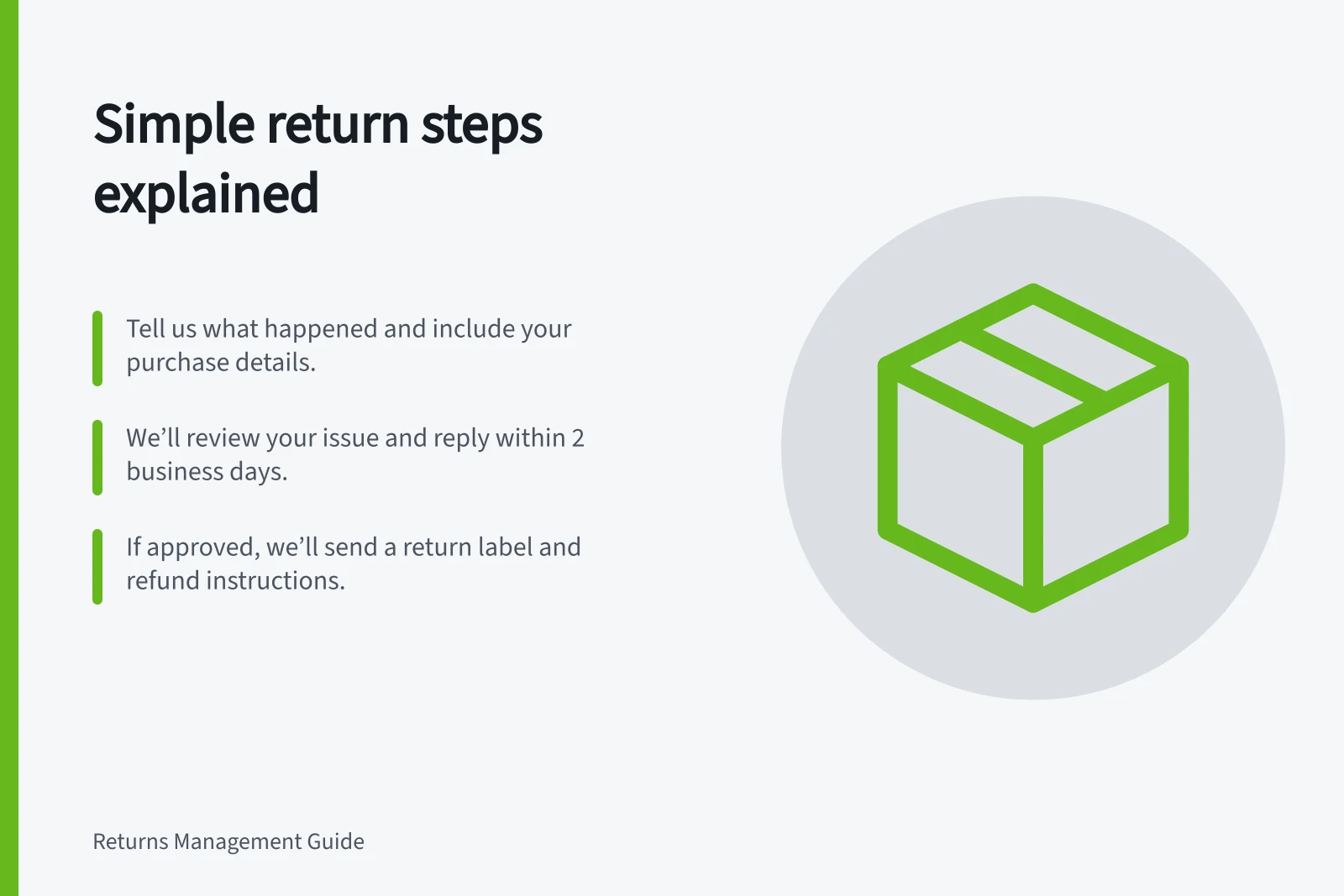
- Do this:Tell us what went wrong and give us details that help us find your purchase
- Include this:A photo of the fault, serial number (if available), or proof of purchase like a receipt or email confirmation
- If the item is large or heavy:We’ll send you a free return label and instructions for arranging collection
Describe the right route in everyday words
Customers can describe an item as faulty, damaged, not as described or simply unsuitable. Ask what happened; do not make them decide whether a problem is legally “major” or “minor” before making contact. The business may assess a reported problem before providing a remedy.
For a change of mind, point to the store’s actual offer and its conditions. For a product problem, explain how the customer can contact the store and what response to expect.
For example, replace “Submit your claim for eligibility assessment” with “Tell us what happened to the item and give us a way to find your purchase. We’ll explain what happens next.” The store can then add its real contact method and information requirements.
Replace vague milestones
“We’ll process your return” could mean receiving a request, checking an item or approving a refund. Name the event: “We’ve received your request”, “We’ve received the item” or “We’ve approved the refund”. Approval does not mean the money has reached the customer’s account.
Write transport instructions for the item and route involved. A standard “post it to us” line may be unsuitable for a reported problem with a large, heavy or hard-to-remove product.
Be clear about who pays return costs before the customer sends the item. If the store asks for proof of purchase, explain the request in plain language.
Key Facts About Your Rights Under Australian Consumer Law
- Proof of purchase required
- Yes – a receipt, email or bank statement showing the transaction
- Return postage cost
- Covered by us if the product is faulty or not as described
Check whether each step stands alone
Read the steps from a customer’s point of view. The first action, requested information and next store response should be clear without decoding a status code or searching elsewhere for a contact method. Check that staff can deliver the responses the wording promises.